
Your First Remodel? Here's What Actually Happens Behind the Scenes
If you've never been through a kitchen or bathroom remodel before, the whole process can feel like a black box. You know you want a better space, but what actually happens between signing a contract and cooking your first meal in a brand-new kitchen?
For homeowners in Boca Raton and the surrounding South Florida communities, understanding the remodeling process upfront eliminates surprises, reduces stress, and helps you make better decisions along the way. Whether you're planning a full kitchen overhaul or a bathroom transformation, here's a realistic, step-by-step look at what to expect.
Step 1: The Initial Consultation
Everything starts with a conversation. A reputable remodeling contractor will visit your home to understand your goals, assess the existing space, and discuss your budget. This isn't a sales pitch — it's a collaborative meeting where both sides figure out if the project is a good fit.
During this visit, expect your contractor to:
- Ask about your design preferences, lifestyle needs, and must-haves
- Evaluate the current condition of plumbing, electrical, and structural elements
- Take measurements and photographs of the space
- Discuss a rough budget range and realistic expectations
Pro tip: Come prepared with inspiration photos from Pinterest, Houzz, or magazines. Even if your final design looks different, it gives your contractor a clear sense of your style.
Step 2: Design and Material Selection
Once the scope is defined, the design phase begins. This is where your vision starts taking shape on paper — or on screen. You'll work with your contractor or a designer to finalize the layout, choose materials, and make decisions about cabinetry, countertops, tile, fixtures, and finishes.
In South Florida, material selection matters more than you might think. Boca Raton's heat and humidity can affect everything from wood cabinetry to grout lines, so your contractor should guide you toward materials that look beautiful and hold up to the local climate.
This phase typically involves:
- Reviewing 2D or 3D design renderings
- Visiting showrooms to see and touch materials in person
- Finalizing selections for cabinets, countertops, tile, flooring, and hardware
- Choosing plumbing fixtures, lighting, and appliances
Take your time here. Rushing material decisions is one of the most common sources of regret after a remodel.
Step 3: Permitting and Pre-Construction Planning
Depending on the scope of your project, your contractor may need to pull permits from the City of Boca Raton or Palm Beach County. Permits are required for most work involving plumbing, electrical, or structural changes — and skipping them can create serious problems when you sell your home.
A trustworthy contractor handles the permitting process for you. While permits are being processed, your team will also be:
- Ordering materials and coordinating delivery schedules
- Scheduling subcontractors (plumbers, electricians, tile installers)
- Creating a detailed project timeline with milestones
- Preparing your home for the work ahead
This behind-the-scenes planning is what separates a smooth remodel from a chaotic one.
Step 4: Demolition Day
This is the part that feels the most dramatic — and for good reason. Old cabinets come out, tile gets torn up, and your space suddenly looks like a construction zone. It's exciting and a little nerve-wracking at the same time.
Before demolition begins, your contractor should:
- Protect surrounding areas of your home with plastic sheeting and floor coverings
- Shut off water and electrical to the work area
- Set up a plan for debris removal and dumpster placement
Demolition for a typical bathroom might take one to two days. A kitchen can take two to three days depending on the size and complexity. Don't panic when things look messy — this is completely normal and temporary.
Step 5: Rough-In Work (The Stuff Behind the Walls)
After demolition, the focus shifts to the infrastructure you'll never see once the project is done — but it's arguably the most important phase. This includes:
- Plumbing rough-in: Moving or adding water supply lines and drains
- Electrical rough-in: Updating wiring, adding outlets, or installing recessed lighting
- Structural work: Reinforcing walls, adjusting framing, or opening up layouts
Inspections are typically required at this stage before walls can be closed up. Your contractor coordinates these inspections with the local building department so you don't have to.
Step 6: Installation — Where It All Comes Together
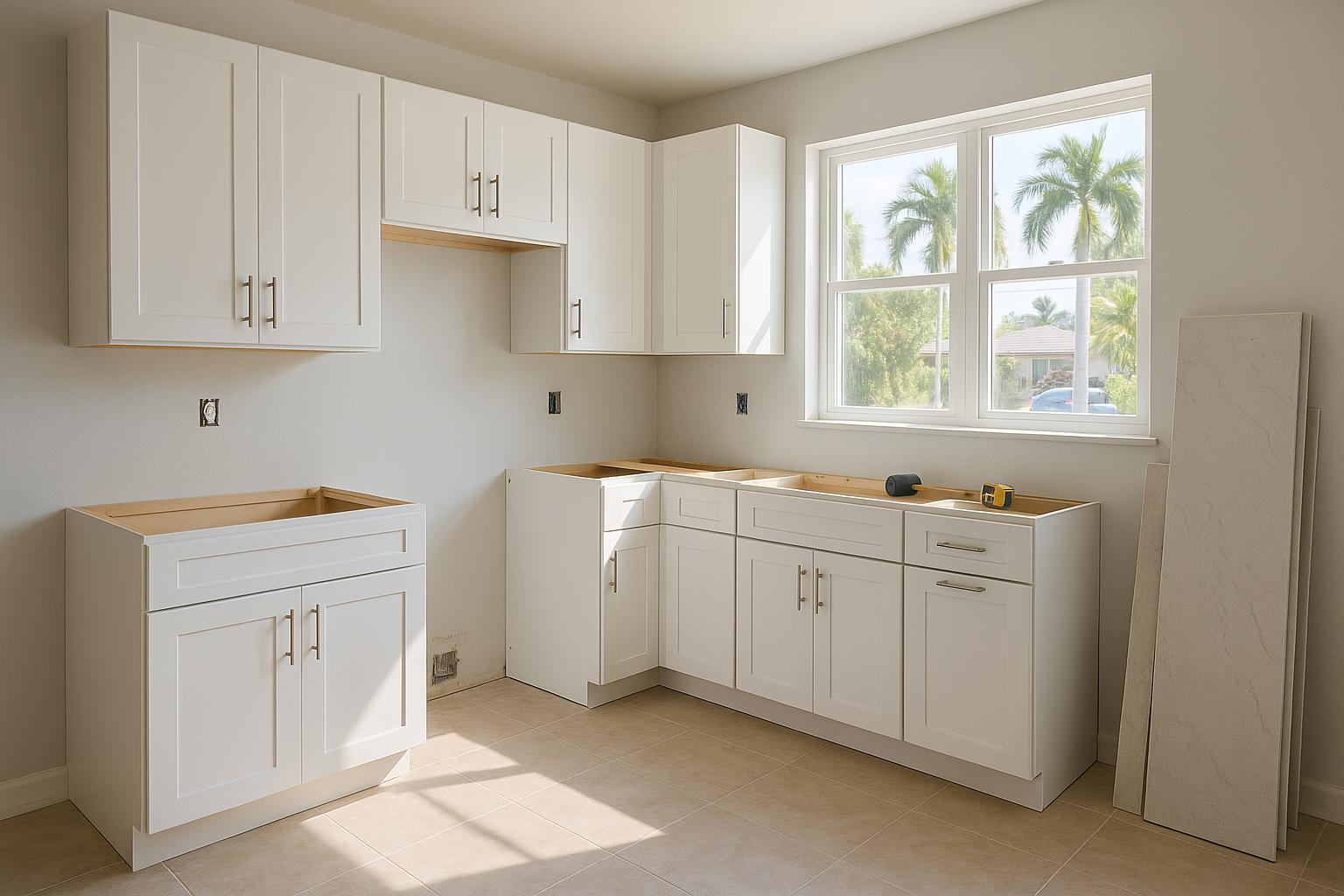
This is the most rewarding phase to watch. Your new space starts to take shape as each element is installed in a carefully coordinated sequence:
- Drywall and painting: Walls are patched, finished, and painted
- Flooring and tile: New tile, luxury vinyl, or other flooring goes down
- Cabinetry: Custom or semi-custom cabinets are installed and leveled
- Countertops: Fabricated and installed after cabinets are in place
- Fixtures and hardware: Faucets, sinks, lighting, cabinet pulls, and accessories
- Appliances: Connected and tested (for kitchen remodels)
The order matters. Installing countertops before cabinets, for example, would be a costly mistake. Experienced contractors in Boca Raton follow a proven sequence to keep everything on track.
Step 7: Final Walkthrough and Punch List
Before your contractor calls the project complete, you'll do a final walkthrough together. This is your opportunity to inspect every detail — open every drawer, test every faucet, check every grout line, and note anything that needs attention.
Any items that need correction go on a punch list, which your contractor addresses before the final payment is made. A good contractor welcomes this process because they want you to be completely satisfied.
During the walkthrough, also ask about:
- Warranty information for materials and workmanship
- Care and maintenance instructions for new surfaces and fixtures
- Copies of all permits and inspection approvals for your records
How Long Does the Whole Process Take?
Every project is different, but here's a general idea for Boca Raton homeowners:
- Bathroom remodel: 3 to 6 weeks from demolition to completion
- Kitchen remodel: 6 to 12 weeks depending on scope and material lead times
- Design and permitting: Add 2 to 6 weeks before construction begins
Custom cabinetry, specialty tile, and imported materials can extend these timelines. Your contractor should communicate realistic expectations from the start.
The Bottom Line: Knowledge Is Your Best Tool
A remodel doesn't have to be stressful or mysterious. When you understand what's happening at each stage, you can make better decisions, ask smarter questions, and actually enjoy watching your home transform.
At Sterling Foundation Contractors, we walk every Boca Raton homeowner through this process before a single hammer swings. From your first consultation to your final walkthrough, we believe transparency and communication are just as important as craftsmanship. If you're considering a kitchen or bathroom remodel, we'd love to show you how smooth the process can be.